
I <3 Martin Margiela

Well, first of all, happy birthday, Martin Margiela! I am sure you’re reading this!
I find this a wonderful reason to write about one of my favorite designers — not to analyze his work, which I’ll leave to fashion historians and experts, but as an enthusiast. Someone who has spent years reading about him, watching the few documentaries that exist, collecting magazines dedicated to him, looking at those grainy runway photos, and tracking vintage listings.
Everything I’m about to tell you here comes from this reading and watching and collecting — primarily from two magazines I own and love (more on those below), from Ashantéa’s great research on Substack, from the StyleZeitgeist podcast with Patrick Scallon who led communications for the Maison from 1993 to 2008, and from two documentaries: Margiela in His Own Words by Reiner Holzemer and We Margiela by Menna Laura Meijer (if you find it on another streaming platform please tell me, I have been looking). So, while I’m no authority on Martin Margiela, I have read and watched quite a bit, which has allowed me to form an image of him in my head. And all I am here to say is: I love that image.
We’re both born in April, and that means we have one thing in common. He loved the number nine — neuf in French, which also means new, which was the first name of his company (SARL Neuf, registered with Jenny Meirens in 1988), which is also part of the name of my own ‘operation’: comme/neuf. Does that count as another thing in common? It absolutely does not, but I’ll take it anyway.
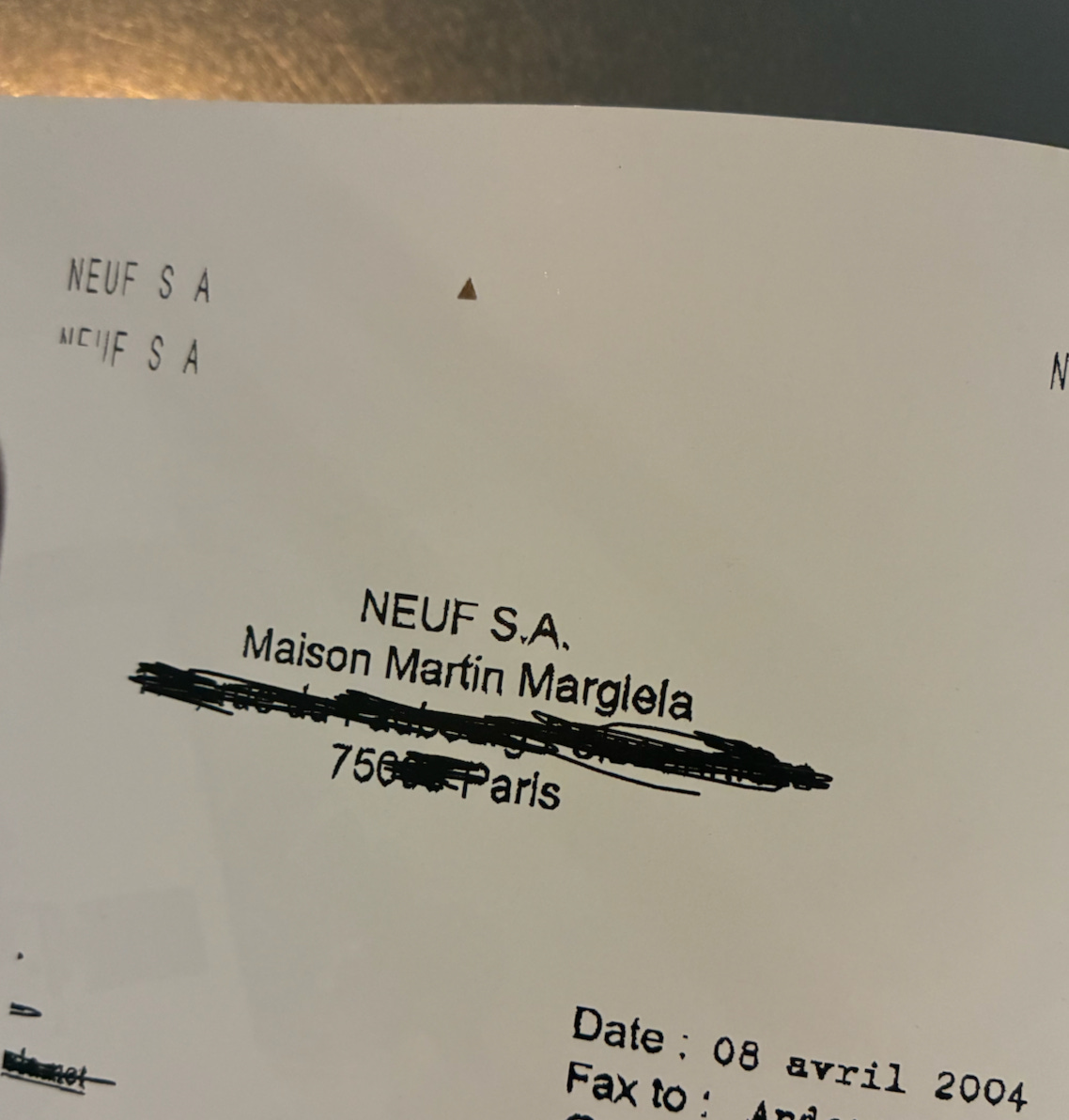
What I love specifically! I love that he managed to remain so private throughout all this time — really invisible, in an industry that runs on personality and face. His staff wore white lab coats, his headquarters was an 18th-century convent in the 11th arrondissement in Paris, and every single surface was painted white, including the furniture, including the telephones. The telephones! He has not been photographed for publication since 1988, and because of this, in my head, he is still a thirty-something-year-old.
I don’t have a lot from Margiela, but what I do have, I treasure: a trench coat I find very special; vintage Tabi boots that took me a while to like visually and that I’ve been wearing every single day for the past three or four months; a white shirt in very thick poplin that feels like a light jacket; a brown turtleneck in very thin wool. That’s what remains. I had much more — I sold a lot. Back when I had more four-stitch-marked items, I was often guilty of being that person. That thrill when someone notices. Miam!
I also want to mention We Margiela again specifically, because in it, Jenny Meirens — who co-founded the house and kept it alive financially and who is usually referred to as Margiela’s business partner — finally speaks on camera, months before her death in 2017, about a partnership she had lost. And Ashantéa’s Substack article is years of research with corrections to virtually every lazy biographical error that’s been circulating for decades — she’s the real expert here.
Now, let me tell you about two other things I own and cherish: my magazines.
1. Griffé
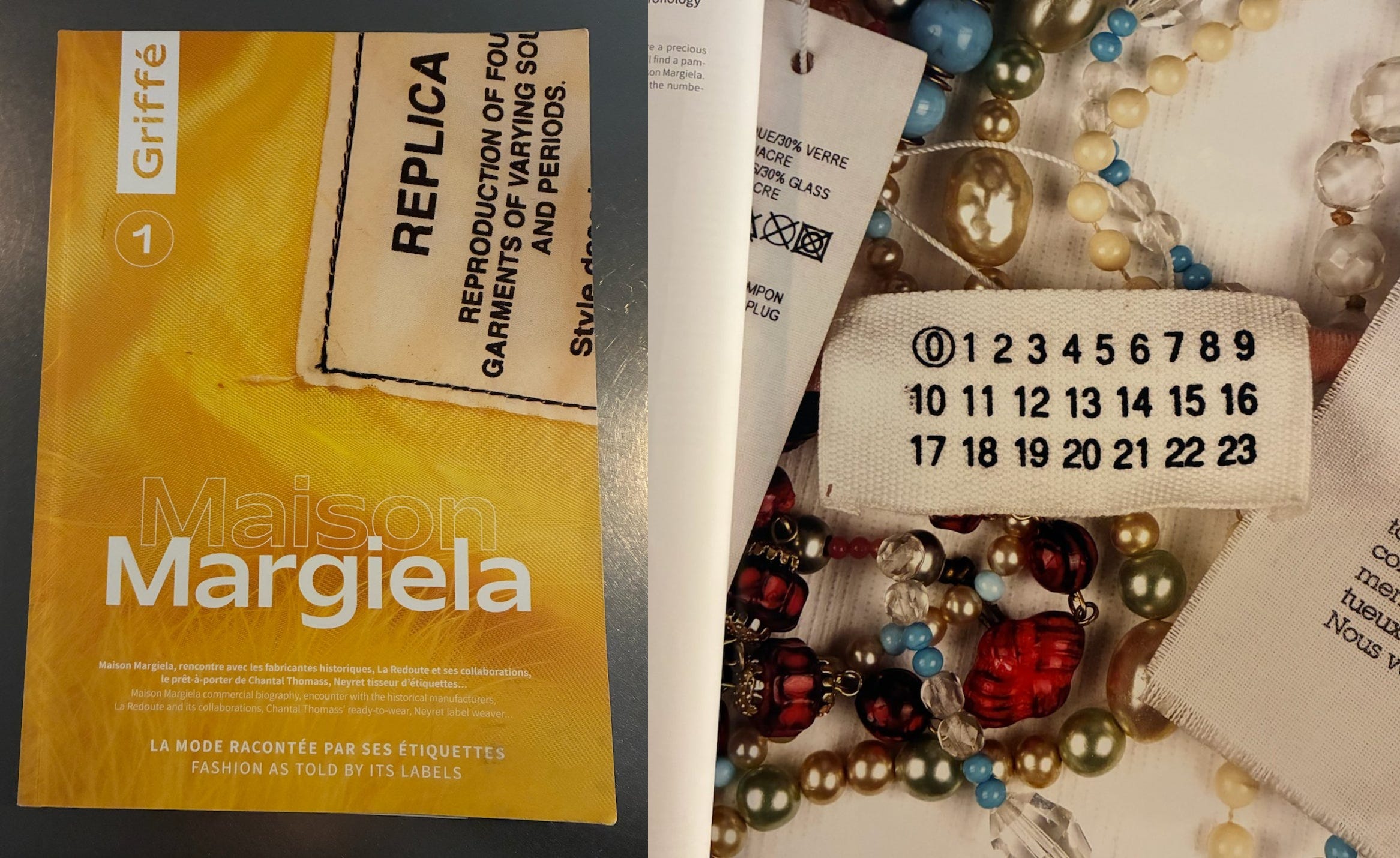
Griffé is one of the best magazines I’ve ever had. The level of research, dedication, and genuine passion that you find in its pages is outstanding — co-founded Julien & Salomé with an idea to not just talk about a designer but to go behind the garment — the processes, the materials, the labels, the commercial infrastructure.
The first issue is dedicated to Maison Martin Margiela, and it comes with a fold-out label chronology tucked inside (something I will have framed and put on the wall), mapping every version of the white four-stitch label from the brand’s creation to 2022, alongside the composition labels from licensees like Fuzzi, Deni Cler, Miss Deanna, and Staff International. If you have ever tried to date a vintage Margiela piece by its label, this chronology is it.
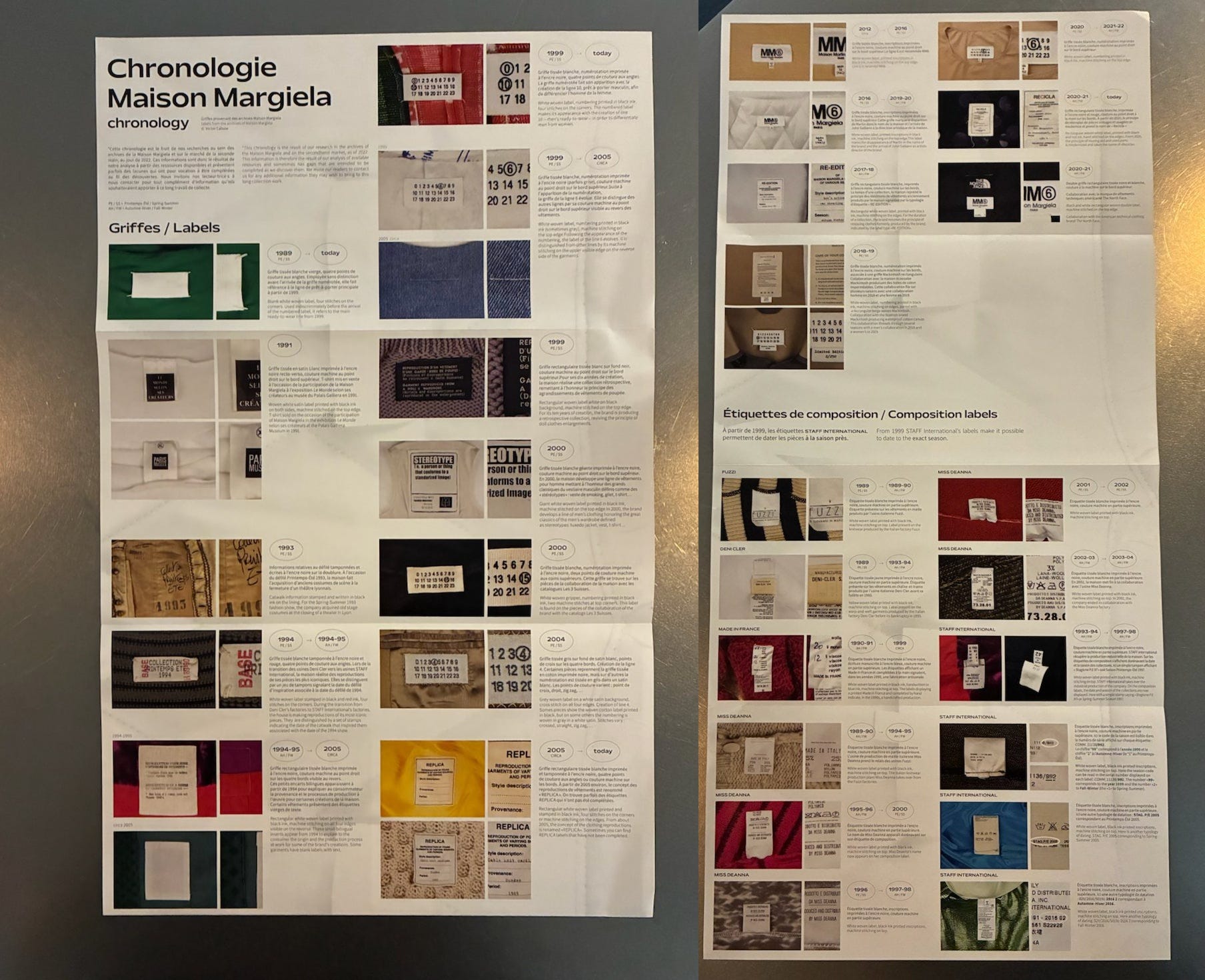
What I learned from the commercial biography inside: the company started with essentially no money, and Martin chose not to pay himself a salary in the early years. The first collection was nearly lost when a factory went under, taking the garments and the money with it, and then the same thing happened again in 1993. Jenny Meirens kept the whole thing alive. The Artisanal line was born in a cellar, sourced from flea markets, Dutch thrift wholesalers and old theater costumes. The specific components of early vintage pieces were often inscribed by hand using a (!)Bic pen! And the “Replica” line didn’t receive its official label until 1994.
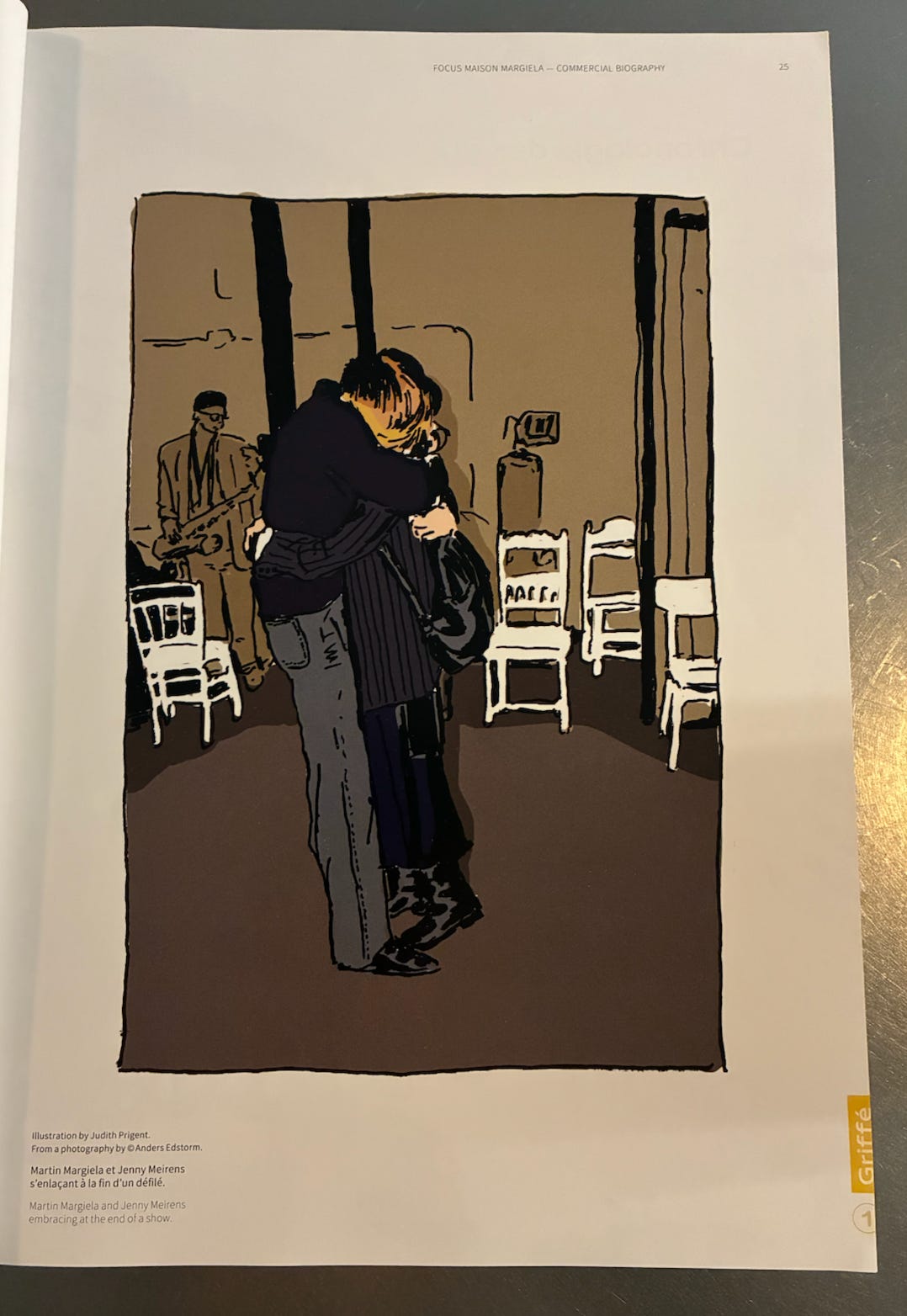
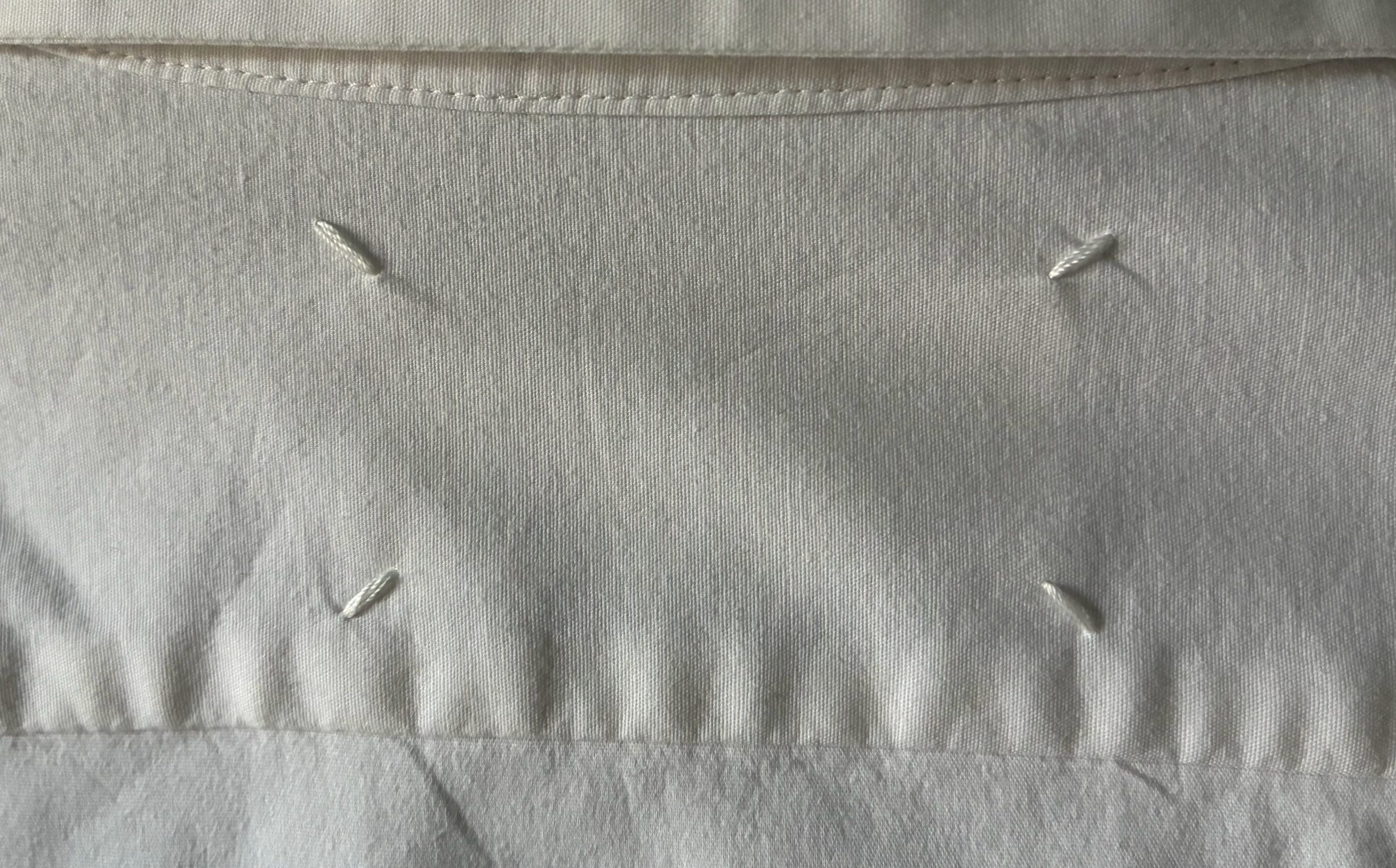
And then there’s Martin telling his pattern cutter Graziella Picozzi — who manufactured garments for the first four collections and was crucial to the whole operation — that there was no need for a name on the label. Tu verras, il n’y a pas besoin de nom, tu verras! He was, of course, right, and the blank white label with four little tack stitches became one of fashion’s most recognizable signatures.
If you can find a copy of Griffé, I wholeheartedly recommend it. Issue #1 is sold out on their site, but they’ve since published issues on Mugler and Kenzo. I really hope Salomé and Julien bless us with more issues soon, and one of them will be on Jil Sander, my other all-time favorite persona.
2. A Magazine Curated By
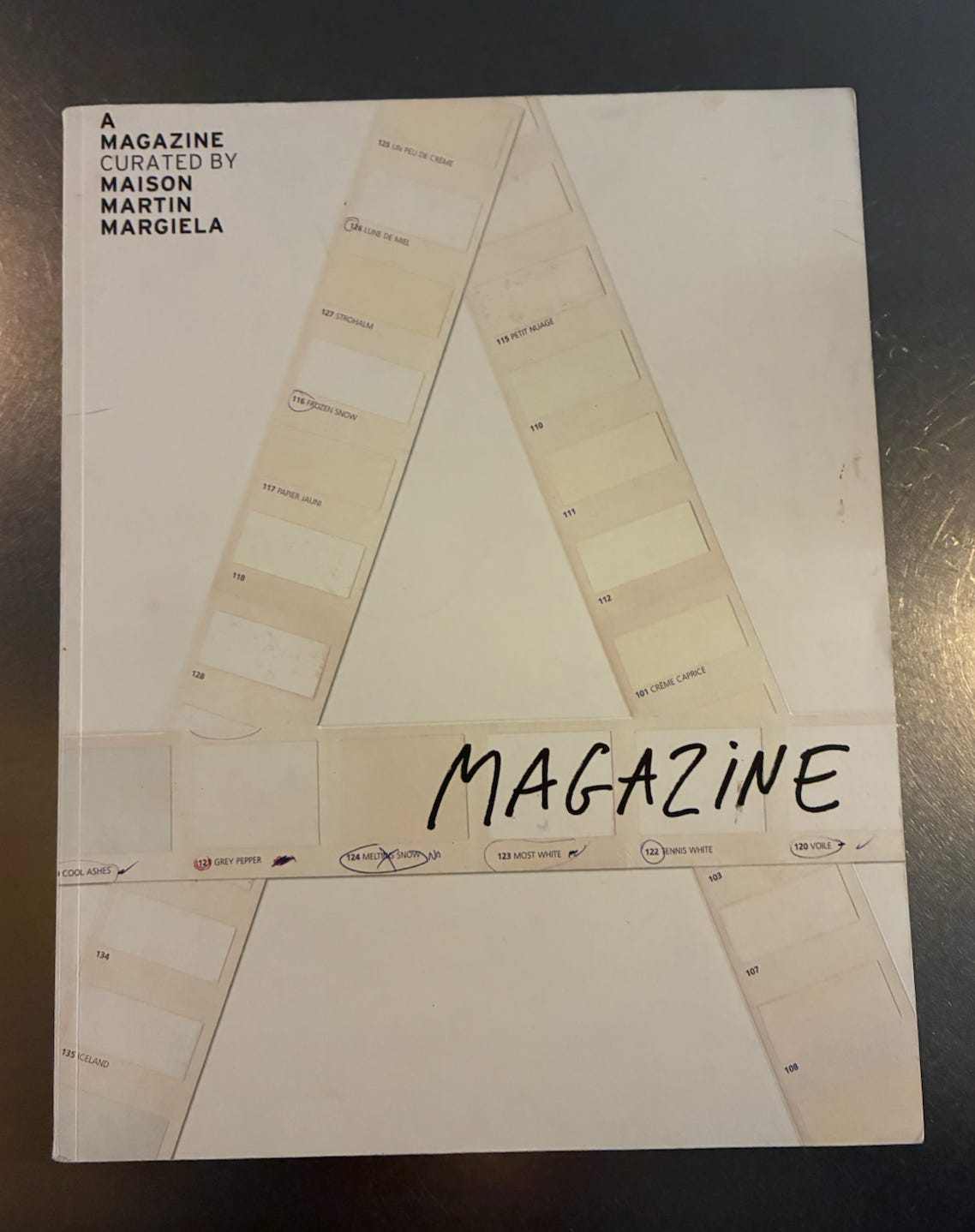
A Magazine Curated By started as a Belgian fashion publication initiated by Walter Van Beirendonck for the Landed-Geland fashion festival in 2000, where each issue was handed over entirely to a guest designer to invent their own magazine — curate it, shape it, reinvent what a magazine even is. The early ones were lettered rather than numbered, with Dirk Van Saene, Bernhard Willhelm, Hussein Chalayan, and Olivier Theyskens each taking a turn. The Maison Martin Margiela issue was N°1 of the renamed series, published in 2004, and it became a collector’s item. I am a collector!!!
The issue acts as a reunion — everyone who had ever had ties to the house was invited: staff, collaborators, trainees, assistants, models, artists, photographers, musicians, choreographers, filmmakers. Some still connected to the Maison, others long gone their own way. The dress code, as the editors put it, was: The past is what bonds us — the future leads us.
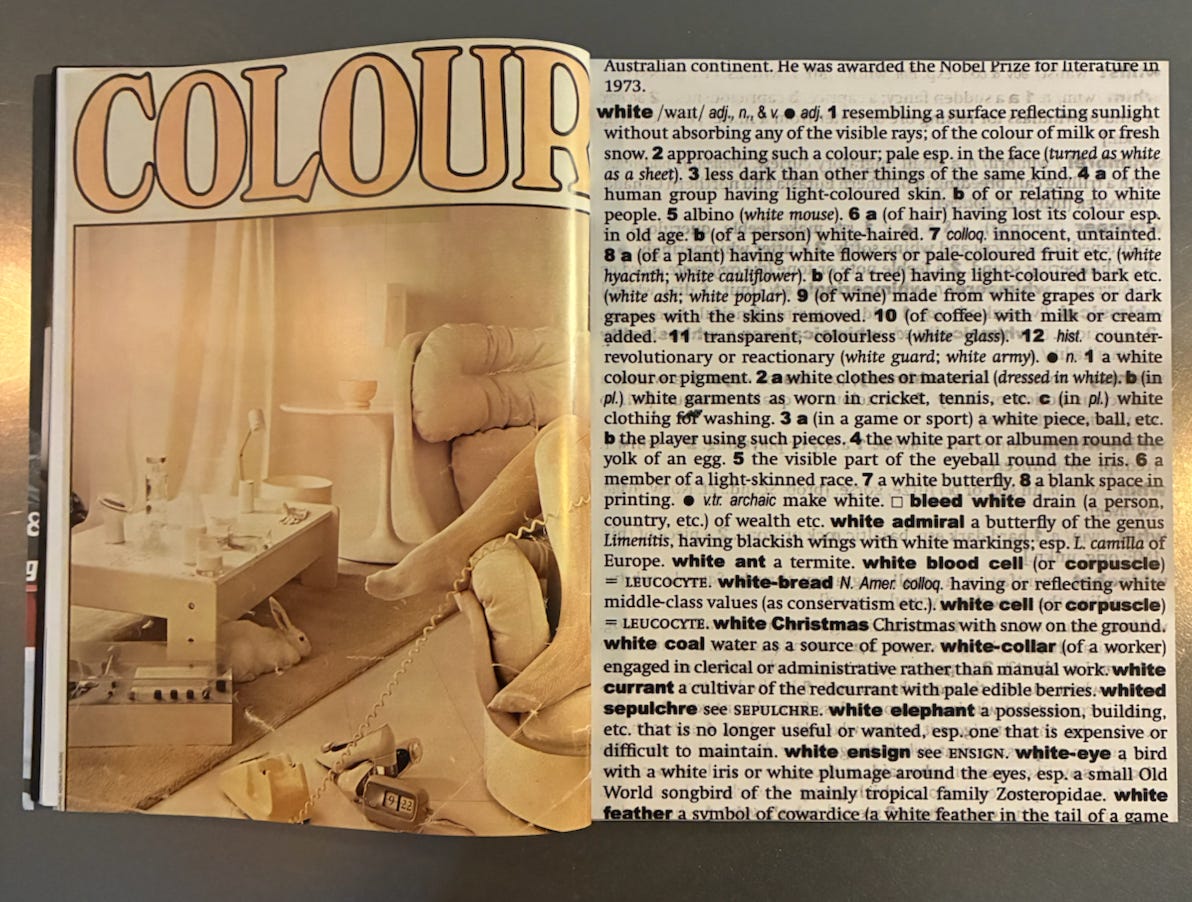
White runs through the whole issue as a thread — white in all its temperatures, which the Maison had used since the beginning as a kind of unifying signature. And when I say all its temperatures, I really mean it: there is a shade called “Frozen Snow”, and a shade called “Most White”, and there is a full dictionary entry for “white.” There is also an Aquafresh tooth-shade chart (yes, Aquafresh, the toothpaste). Then we also have a Belgian pralines ad, a Japanese cake recipe, Jane Birkin, a missing-person poster for a doll stolen from an exhibition in Antwerp in 1993. And there are step-by-step instructions written by Martin himself for making a sweater out of eight pairs of men’s socks, inspired by the aesthetics of wartime knitting. Every page communicates through fax and photocopy, and no single contribution bears Margiela’s name.


(A limited-edition reprint came out in 2021, each copy containing one unsigned archival photograph placed at random — by photographers like Mark Borthwick, Anders Edström, and Marina Faust. Proceeds went to Sea Watch and RIACE France.)
And that’s it, really. I hope you enjoyed thinking about Martin with me for a minute. Happy birthday to him, and thank you for reading!
When you get this, I’ll probably be on my way to my holiday, which is actually my own birthday celebration, which is Monday the 13th, if you’d like to send me a message.:) And if you like what I do, of course, feel free to support me.
I leave you with this vintage Margiela vest that I’m sure we can all afford because it’s just 16K.
Happy Birthday, Anni! Thank you for this trip through your collection's treasures! I've never owned a piece of Margiela, but I've seen many in the consignment shops, so it's around. I adore Kenzo (I have several older pieces) and would love to see that book!
You're so lucky, I remember time when it used to be so expensive, I think even more than lot of Dutch/Purple/Selfservice/Visionaire, somehow news about limited reprint missed me. I remember Margiela's A Magazine being around a lot back in my Tumblr days, I really wanted to try to make this sweater for ages and I think I'll try it when I'll hunt down some good 100% socks (since finding pure cotton is even harder than before).
Thank you so much for showing the Margiela Griffe book, it's truly something that is needed in fashion a lot - now myself I want the Kenzo one, as I always felt he's barely talked about these times in general. On related note, Kenzo used to be the most popular of Japanese designers in my country's magazines after 1989, compared to other famous Japanese designers that were showing in Paris. I have feeling Yohji was also covered often than CdG or Issey (but I do remember when it was talked about c. 2000 when daugher of then PM, Agata Buzek was walking CdG) but I'd have to check.